


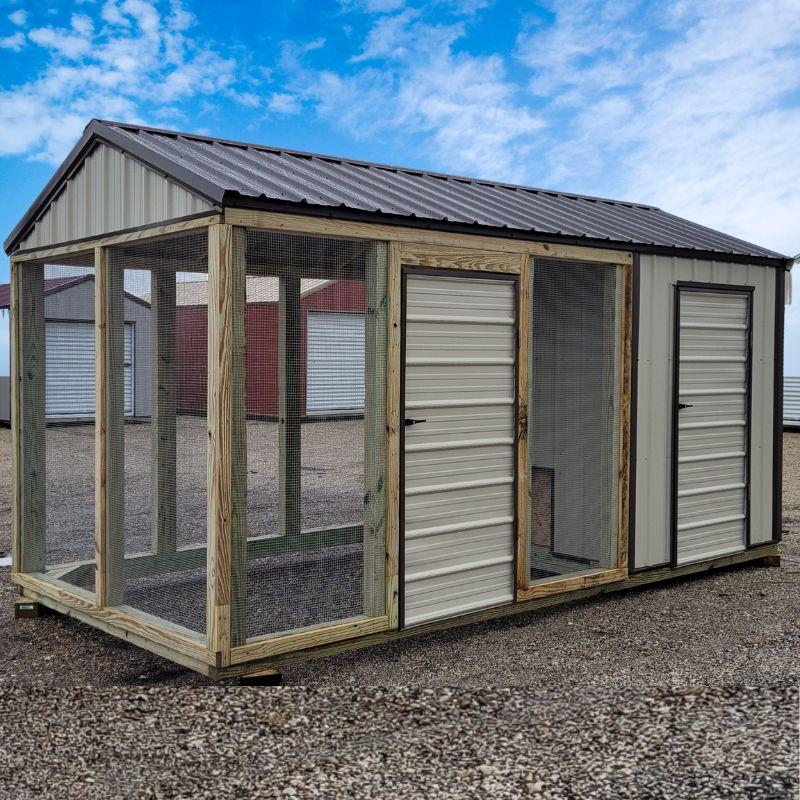
Raising backyard chickens in Lott, Texas is rewarding. Fresh eggs, healthy birds, and a self sufficient lifestyle are benefits many families enjoy. But in Central Texas, predators are always nearby. Raccoons, coyotes, hawks, snakes, and even stray dogs can threaten your flock in a single night. That’s why building a predator-proof chicken coop is not optional it’s essential.
We believe your birds deserve real protection. In this guide, we’ll show you how to design, build, and upgrade custom chicken coops that stand strong against Texas predators while staying practical, simple, and long lasting.
Why Every Backyard Needs a Predator Proof Chicken Coop in Lott, Texas
Texas wildlife is active year round. In small towns like Lott, open land and wooded areas give predators easy access to residential backyards.
Common threats include:
-
Raccoons that unlatch simple locks
-
Coyotes that dig under fences
-
Hawks that swoop during free range time
-
Snakes that squeeze through small openings
-
Opossums that attack chicks
A standard coop with thin wire and weak doors won’t last. A predator proof chicken coop is built differently. It focuses on strength, smart design, and zero weak points.
Planning Custom Chicken Coops for Maximum Protection
When we design custom chicken coops, we focus on both safety and function. Every detail matters from the floor to the roof.
1. Start with a Solid Foundation
Predators often attack from below. Coyotes and dogs dig. Rats and snakes burrow.
We recommend:
-
Concrete slab foundations
-
Pressure treated wood framing
-
Hardware cloth buried 12 inches underground
-
A perimeter dig barrier
Avoid placing your coop directly on dirt without reinforcement. Elevating your coop 12–18 inches off the ground also reduces risk and improves airflow during Texas summers.
2. Use Hardware Cloth Not Chicken Wire
This is critical.
Chicken wire keeps chickens in. It does not keep predators out.
For a true predator proof chicken coop, use:
-
½-inch galvanized hardware cloth
-
Heavy duty staples or screws with washers
-
Double layer protection in high risk areas
Raccoons can tear through weak wire. Hardware cloth prevents claw reach and bite-through attacks.
3. Reinforce Doors and Latches
Raccoons are smart. They can open simple slide bolts and hooks.
Upgrade your security with:
-
Locking carabiners
-
Padlocks
-
Spring loaded latches
-
Self closing hinges
Every entry point should be secure at night. We design custom chicken coops with reinforced access doors that close tightly with no gaps.
Roof and Ventilation: The Overlooked Entry Points
Many people focus on walls and forget the top.
In Texas, predators climb. Raccoons scale walls. Snakes enter through ventilation holes.
We recommend:
-
Solid plywood roofing with metal panels
-
Covered ridge vents
-
Hardware cloth over every vent opening
-
No open eaves
Proper ventilation is still necessary for heat control, especially in Lott’s hot summers. Secure airflow points carefully.
Secure Chicken Runs for Daytime Safety
Your run is just as important as your coop.
A secure run should include:
-
Fully enclosed top (wire or metal panel)
-
Buried hardware cloth skirt
-
Strong corner posts set in concrete
-
Heavy duty framing
Hawks are common in rural Texas. An open top run invites aerial attacks. Cover it completely.
Nighttime Lockdown Strategy
Even the strongest predator-proof chicken coop fails if it’s left open.
Create a nightly routine:
-
Count chickens before dusk
-
Close and lock doors
-
Check latches
-
Inspect fencing weekly
Automatic coop doors are a smart upgrade. They close at sunset and open at sunrise. This reduces human error.
Custom Chicken Coops Designed for Texas Weather
Protection isn’t just about predators. It’s also about climate.
In Lott, summers are hot and humid. Winters are mild but can dip below freezing.
Your custom chicken coops should include:
-
Cross ventilation
-
Shade positioning
-
Reflective roofing
-
Insulated nesting boxes
-
Elevated flooring
Heat stress weakens birds, making them vulnerable. Strong airflow keeps them healthy and alert.
Predator-Proof Nesting Boxes
Nest boxes are easy targets if poorly designed.
Upgrade them by:
-
Placing boxes inside the main secured structure
-
Using solid backing
-
Adding secure access doors
-
Ensuring no exterior gaps
External egg collection doors must be reinforced just like the main entry.
Common Mistakes That Invite Predators
Avoid these costly errors:
-
Using chicken wire instead of hardware cloth
-
Leaving small gaps under doors
-
Skipping buried wire barriers
-
Ignoring roof protection
-
Weak framing materials
-
Free ranging without supervision
A single weak spot is enough for disaster.
Landscaping Around Your Coop
Security goes beyond the structure.
We suggest:
-
Trimming bushes near the coop
-
Installing motion lights
-
Using gravel around the perimeter
-
Avoiding food scraps on the ground
-
Securing feed bins in metal containers
Predators follow scent and cover. Reduce both.
Should You Free Range in Lott, Texas?
Free ranging is popular, but risky.
If you allow it:
-
Supervise during daylight
-
Provide covered retreat areas
-
Use livestock guardian dogs
-
Keep free range time limited
Even with a strong predator proof chicken coop, daytime exposure carries risk.
When to Upgrade to Custom Chicken Coops
If you notice:
-
Claw marks on wood
-
Dug out soil
-
Bent wire
-
Missing eggs
-
Feather scatter
It’s time to upgrade.
We recommend investing in properly built custom chicken coops that are engineered for Texas conditions. They save money long term by preventing losses.
Internal Improvements for Added Security
Inside your coop, consider:
-
Roost bars positioned away from walls
-
Secure feed storage
-
Elevated water systems
-
No clutter near walls
Predators reach through openings if chickens roost too close.
Maintenance Checklist for a Predator Proof Chicken Coop
Monthly inspection:
-
Check wire tension
-
Inspect door locks
-
Look for rust
-
Seal cracks
-
Tighten screws
Weather weakens materials over time. Stay ahead of it.
FAQs
Q1. What is the best material for a predator proof chicken coop?
Galvanized hardware cloth, solid wood framing, and metal roofing provide the strongest defense.
Q2. How deep should I bury wire around my coop?
At least 12 inches underground with a horizontal skirt to prevent digging.
Q3. Are custom chicken coops worth it?
Yes. Custom built designs address local predator threats and weather challenges better than basic kits.
Q4. Do I need a roof over my chicken run?
Yes. Hawks and climbing animals require overhead protection.
Q5. How often should I inspect my coop?
Monthly inspections are ideal, with weekly quick checks.
Final Thoughts
In Lott, Texas, predator activity is part of rural life. The difference between losing birds and protecting them comes down to preparation.
A properly designed predator proof chicken coop eliminates weak points. Strong framing, hardware cloth, secure locks, buried barriers, and full enclosure make the difference. Investing in well built custom chicken coops ensures your birds stay safe in every season.

 English
 Arabic
 French
 Portuguese
 Deutsch
 Turkish
 Dutch
Dutch
 Italiano
 Russian
 Romaian
 Portuguese (Brazil)
 Greek
Greek