


Understand The Difference Between Ignored Links and Disavowed Links
In the realm of SEO, backlinks play a critical role in shaping a website’s authority and search engine rankings. However, not all backlinks are created equal. Some links can enhance your SEO efforts, while others can harm your website’s credibility and performance. Understanding how to manage low-quality or harmful links is essential for maintaining a healthy backlink profile. Two common terms that often confuse website owners are ignored links and disavowed links. While they may sound similar, their implications for SEO are quite different.
What Are Ignored Links?
Ignored links are backlinks that Google identifies as low-value or irrelevant but does not actively penalize your website for having. Essentially, Google chooses to disregard these links when evaluating your site’s authority and ranking potential. Ignored links often come from sources that are naturally low-quality, such as forums, blog comments, or spammy directories.
From my experience working with multiple clients, ignored links are relatively common. Many businesses notice them when auditing their backlink profiles using tools like Google Search Console or SEMrush. While these links do not provide SEO benefits, they also do not harm your website unless they become part of a larger pattern of spammy link activity.
What Are Disavowed Links?
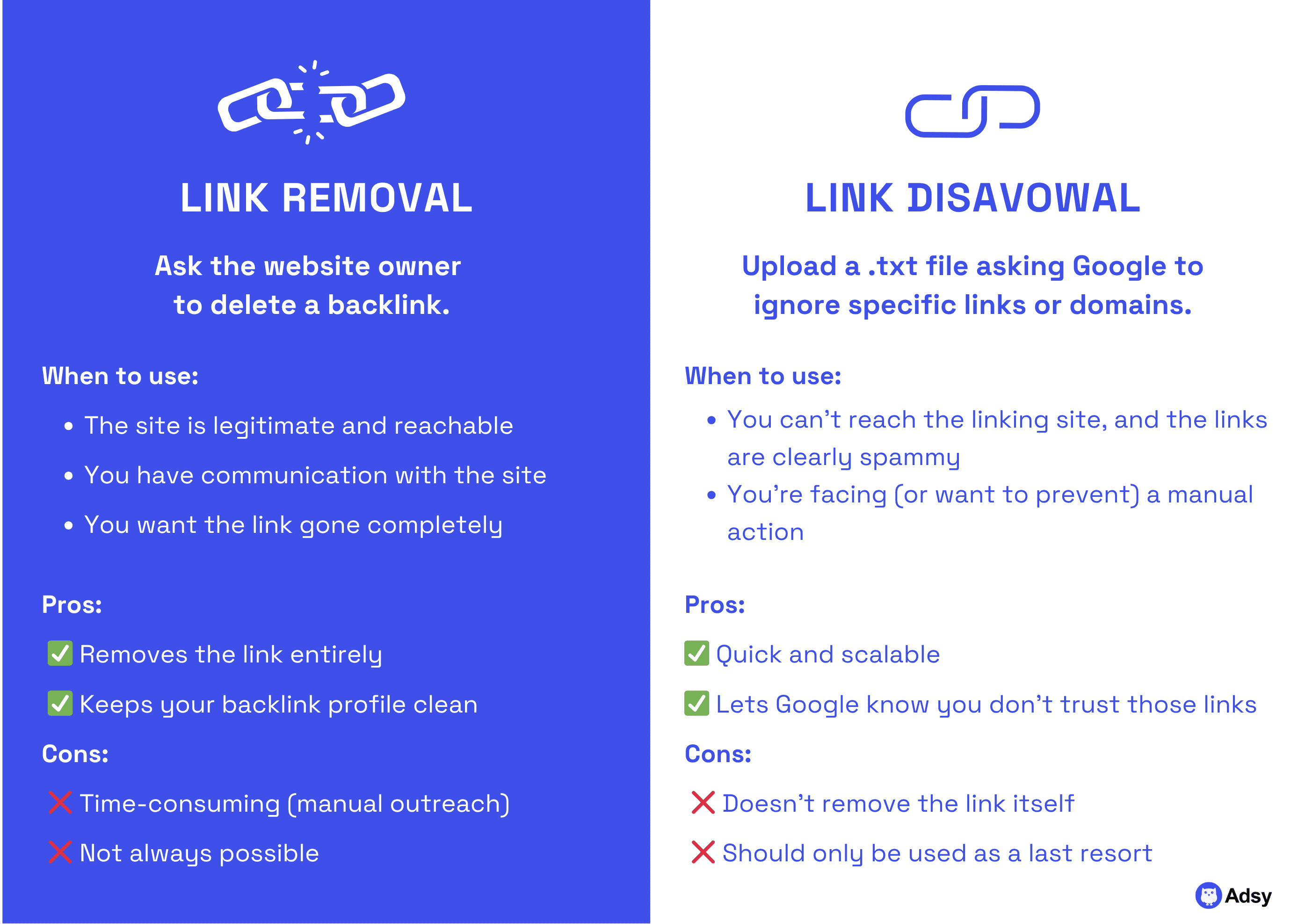
Disavowed links, on the other hand, are links that website owners actively tell Google to ignore. Using Google’s Disavow Tool, you can submit a list of URLs or domains that you consider harmful to your site’s SEO. Disavowing a link essentially removes any association between your website and the questionable source in Google’s evaluation process.
Disavowing links is a more proactive approach than simply letting Google ignore them. It is typically used in situations where a website has been targeted by spammy or manipulative backlinks, such as link farms or paid link schemes. These types of links can trigger penalties under Google’s algorithm, reducing search rankings and organic traffic.
Key Differences Between Ignored and Disavowed Links
1. Control
The most significant difference between ignored and disavowed links is control. Ignored links are managed by Google. The search engine decides which links to discount based on its algorithms and quality assessments. Website owners have no direct input in this process.
Disavowed links, however, are under your control. By submitting a disavow file, you communicate directly with Google, indicating which links you consider harmful. This proactive approach can prevent potential penalties and protect your site’s authority.
2. Risk Management
Ignored links carry minimal risk because Google has already deemed them inconsequential. There’s no immediate need for website owners to act unless these links are part of a broader spam pattern.
Disavowed links are usually associated with high-risk backlinks that could negatively impact rankings. For example, if your site has numerous links from spammy gambling or adult websites, disavowing them reduces the risk of algorithmic penalties or manual actions from Google.
3. Impact on SEO
Ignored links generally have little to no impact on your SEO performance. They neither boost nor harm your site’s rankings.
Disavowed links, when used strategically, can protect your SEO performance and maintain your site’s credibility. By removing the influence of toxic backlinks, you ensure that your website’s authority reflects legitimate, high-quality links.
4. Effort Required
Ignored links require no effort from website owners. Google handles them automatically as part of its ranking evaluation.
Disavowing links requires a deliberate effort. You need to audit your backlink profile, identify potentially harmful links, prepare a disavow file, and submit it to Google. While this process can be time-consuming, the protection it offers is invaluable, especially for sites in competitive niches.
Common Scenarios Where Links Are Ignored
Understanding when Google will ignore links can help website owners prioritize their SEO efforts. Some common scenarios include:
-
Low-quality blog comments: Spammy comments with backlinks are usually ignored.
-
Irrelevant forum links: Links from forums unrelated to your niche often hold no value.
-
Paid directories with little authority: Many low-quality directories are disregarded by Google.
-
Reciprocal links in moderation: Natural reciprocal linking generally gets ignored unless overused.
By knowing these scenarios, businesses can focus on earning high-quality backlinks while avoiding unnecessary concern over inconsequential links.
When to Consider Disavowing Links
Disavowing links is not a task to take lightly. Google recommends disavowing only when a website has a considerable number of unnatural or toxic links that could harm search rankings. Examples include:
-
Links from spammy or hacked websites.
-
Paid links intended to manipulate rankings.
-
Large-scale link farms or networks.
-
Negative SEO attacks where competitors build toxic backlinks to your site.
In my experience, clients who have faced manual penalties due to unnatural links often see significant recovery after carefully auditing their backlink profile and disavowing harmful URLs.
Steps to Disavow Links
Disavowing links requires precision. Here’s a practical step-by-step approach:
-
Audit Your Backlink Profile: Use tools like Google Search Console, Ahrefs, or SEMrush to identify all backlinks.
-
Identify Toxic Links: Look for links from low-quality, irrelevant, or spammy sources.
-
Create a Disavow File: Compile a text file listing the URLs or domains you want Google to ignore.
-
Submit to Google: Upload the disavow file using Google’s Disavow Tool.
-
Monitor Results: Track your rankings and traffic to ensure that disavowing harmful links positively impacts your SEO.
It’s important to note that disavowing links should be done cautiously. Incorrectly disavowing high-quality links can inadvertently harm your SEO performance.
Personal Perspective: Why Understanding This Difference Matters
From my years of working with businesses on SEO strategy, I’ve seen how confusion between ignored and disavowed links can lead to unnecessary worry or even mistakes. Many site owners panic when they see low-quality backlinks, fearing immediate penalties. Understanding that Google often ignores harmless links helps reduce anxiety and allows SEO efforts to focus on high-value opportunities.
On the other hand, knowing when and how to disavow links empowers businesses to protect themselves from penalties and maintain a healthy backlink profile. Companies that treat this process strategically often outperform competitors in search rankings, making it a crucial aspect of long-term SEO investment.
SEO as a Proactive Business Strategy
Managing ignored and disavowed links is not just about avoiding penalties; it’s part of a broader, proactive SEO strategy. By regularly auditing backlinks, understanding link quality, and acting when necessary, businesses can maintain their search engine credibility, build trust with users, and drive sustainable organic traffic.
Many companies choose to collaborate with experienced professionals to handle these tasks efficiently. For instance, working with the Leading SEO Agencies in USA ensures that backlink audits, disavow processes, and link-building strategies are executed with precision, maximizing SEO performance while minimizing risks.
Conclusion
In summary, the distinction between ignored and disavowed links is crucial for any business serious about SEO. Ignored links are low-value backlinks that Google automatically disregards, posing little to no threat to your website’s authority. Disavowed links, however, are proactively submitted by website owners to remove potentially harmful associations and protect search rankings.
Understanding this difference allows businesses to prioritize efforts effectively, focusing on building high-quality backlinks, maintaining website authority, and safeguarding against SEO penalties. By integrating careful backlink management into their digital strategy, companies can ensure long-term growth, sustainable traffic, and enhanced brand credibility.
Ultimately, knowledge and strategy are key. Recognizing when to let links be ignored and when to disavow them empowers businesses to take control of their SEO, turning potential risks into opportunities for growth.
FAQs (Frequently Asked Questions)
What are ignored links in SEO?
Ignored links are backlinks that Google identifies as low-value or irrelevant but does not penalize. They do not contribute to ranking or harm your site’s credibility, as Google automatically chooses to discount them in its evaluation of your website’s authority.
What are disavowed links in SEO?
Disavowed links are backlinks that website owners actively tell Google to ignore using the Disavow Tool. These links are typically considered harmful, and disavowing them prevents potential penalties or negative impacts on search engine rankings.
When should a website owner disavow links?
Disavow links when you have a significant number of toxic, spammy, or manipulative backlinks that could harm your SEO. This includes links from link farms, paid schemes, irrelevant spam sites, or competitors attempting negative SEO attacks.
How do ignored links impact SEO performance?
Ignored links generally have no effect on SEO. Google automatically filters them out, so they neither enhance nor damage your website’s rankings. This allows site owners to focus on building high-quality, authoritative backlinks.
Can disavowing links help recover from Google penalties?
Yes, disavowing harmful backlinks can help recover from algorithmic or manual penalties. By removing the influence of toxic links, your site’s credibility and search rankings can improve, ensuring long-term SEO performance and stability.
How can I identify toxic backlinks before they cause harm?
You can identify toxic backlinks by auditing your site using tools like Google Search Console, Ahrefs, or SEMrush. Look for links from spammy websites, irrelevant niches, or low-authority domains. Paying attention to anchor text patterns and sudden spikes in backlinks can also help spot potential threats.
Is it necessary to disavow every low-quality link?
Not all low-quality links require disavowing. Google often ignores harmless, low-value links automatically. Disavowing should be reserved for links that pose a risk of algorithmic penalties, are spammy, or are part of manipulative link schemes that can harm your website’s SEO authority.
How often should a backlink audit be performed?
A thorough backlink audit should be performed at least quarterly, especially for high-traffic or competitive websites. Regular audits help detect harmful links early, maintain a clean link profile, and ensure that your SEO efforts are not undermined by negative or low-quality backlinks over time.
Can disavowing links improve rankings immediately?
Disavowing links is a long-term SEO safeguard and usually does not result in immediate ranking improvements. It prevents future penalties and restores credibility over time. Rankings may improve gradually as Google reevaluates your backlink profile and prioritizes legitimate, high-quality links.
What is the difference between manual and algorithmic penalties regarding backlinks?
Manual penalties occur when Google reviewers determine your site has unnatural or harmful backlinks, while algorithmic penalties happen automatically due to updates like Penguin. Disavowing links helps mitigate both risks by removing the impact of toxic or spammy links from Google’s evaluation.

 English
 Arabic
 French
 Spanish
 Portuguese
 Deutsch
 Turkish
 Dutch
Dutch
 Russian
 Romaian
 Portuguese (Brazil)
 Greek
Greek