


The United Arab Emirates has positioned itself as a global leader in infrastructure development, logistics, aviation, energy, and smart city innovation. From major airports and seaports to oil and gas facilities, government complexes, and commercial hubs, the country depends on secure and uninterrupted operations. As infrastructure expands, so does the volume of vehicles accessing sensitive sites each day.
This growth brings new security challenges. Vehicles entering critical facilities may carry unauthorized materials, concealed threats, or other risks that could disrupt operations. In such a dynamic environment, real-time vehicle monitoring is no longer optional—it is essential for maintaining safety, operational continuity, and national resilience.
The Limitations of Delayed or Manual Inspections
Traditional vehicle inspection processes often rely on manual checks or delayed reviews. Security personnel visually inspect vehicles, sometimes using handheld mirrors or basic tools to examine the undercarriage. While these methods can provide basic oversight, they are time-consuming and heavily dependent on human judgment.
Manual inspections are also inconsistent. Factors such as fatigue, poor lighting, high traffic volumes, and environmental conditions can affect accuracy. In high-throughput UAE facilities where thousands of vehicles may pass daily, even minor inefficiencies can create bottlenecks and reduce overall security effectiveness.
Delayed threat detection is particularly problematic. If a suspicious object is identified only after a vehicle has entered a restricted area, the consequences can be severe. Real-time monitoring addresses this risk by providing immediate insights and alerts before vehicles gain access.
The Shift Toward Real-Time Monitoring Solutions
Modern infrastructure demands proactive security strategies. Real-time vehicle monitoring systems are designed to capture, analyze, and respond to inspection data instantly. Instead of relying solely on human observation, these systems use advanced imaging technologies and intelligent software to deliver immediate results.
By integrating high-resolution cameras, sensors, and analytics platforms, security teams gain clear visibility into vehicle undercarriages and other critical areas. Suspicious objects, structural anomalies, or unauthorized modifications can be flagged in seconds. This instant feedback allows personnel to take action before potential threats escalate.
The shift toward real-time systems reflects the UAE’s broader commitment to smart infrastructure and digital transformation. Security solutions are increasingly being designed to operate as part of an interconnected ecosystem rather than as standalone tools.
Enhancing Protection ofr Critical Infrastructure
Airports, power plants, government buildings, oil refineries, and logistics centers represent high-value targets that require multi-layered security. Real-time vehicle monitoring strengthens perimeter defenses by ensuring that every vehicle entering a site is screened thoroughly and efficiently.
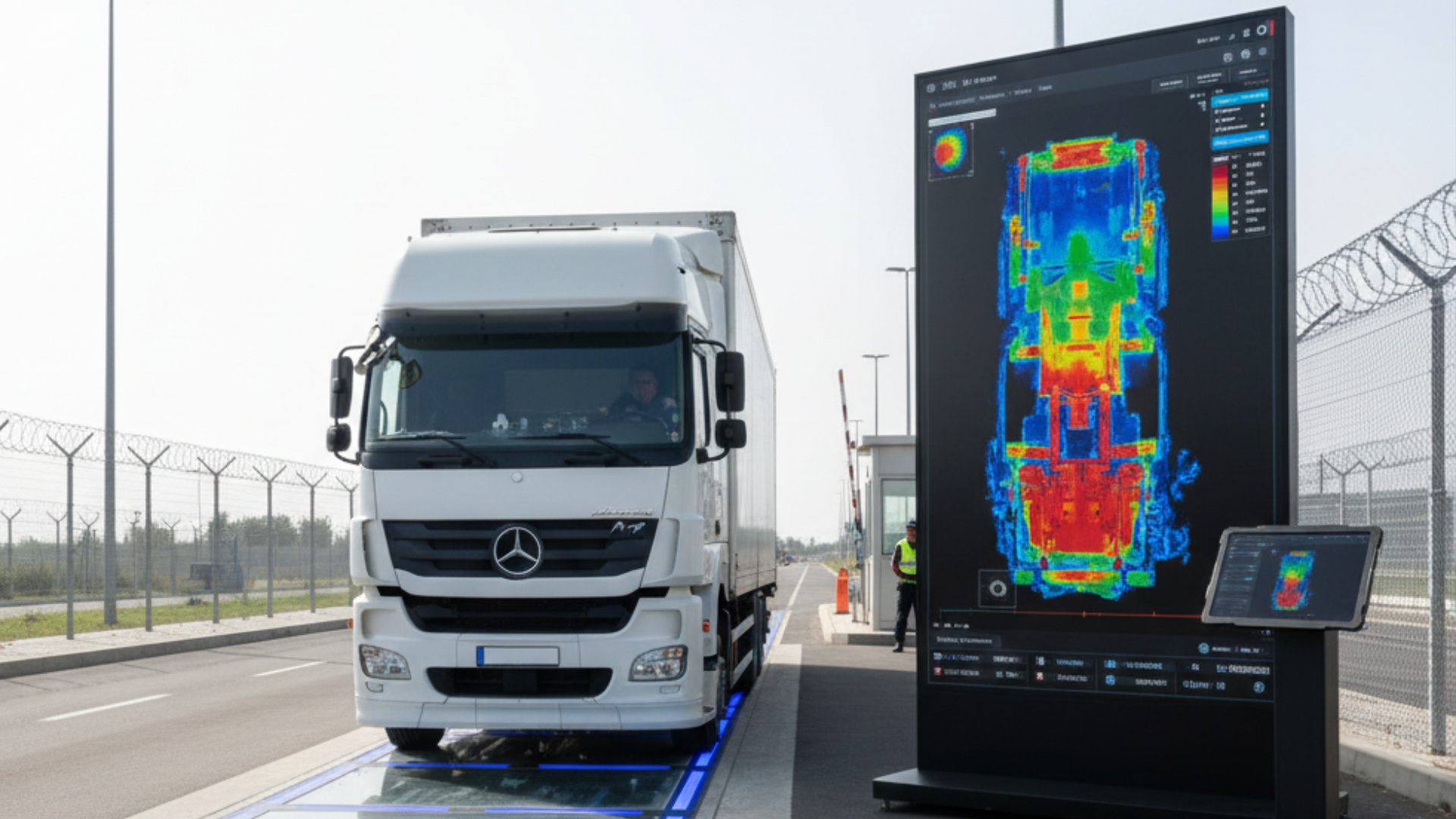
An under vehicle inspection system plays a vital role within this layered strategy by providing detailed, automated scanning of vehicle undersides as they pass through checkpoints. Instead of stopping each vehicle for manual checks, the system captures and analyzes images instantly, allowing traffic to continue moving while maintaining strong security standards.
This approach significantly reduces the likelihood of concealed threats entering restricted areas. It also ensures that inspections are consistent, standardized, and less susceptible to human error.
Supporting High-Volume Operations
One of the biggest challenges facing UAE infrastructure is managing high vehicle throughput without compromising safety. Logistics hubs and industrial zones often operate around the clock, with commercial vehicles, staff transport, and service providers moving continuously.
Real-time monitoring systems are designed to handle this demand. Vehicles can be inspected while in motion, minimizing delays and preventing congestion at entry points. This not only improves operational efficiency but also enhances safety by reducing the risk of crowding near secure gates.
Efficient traffic flow is particularly important in sectors such as aviation and energy, where delays can have significant financial and operational consequences. By combining speed with precision, real-time vehicle monitoring supports both security and productivity.
Improving Decision-Making Through Data
Another key advantage of real-time monitoring is the ability to collect and analyze inspection data over time. Digital platforms store images, timestamps, and alerts, creating a comprehensive database of vehicle entry records.
This data can be used to identify patterns, track repeat vehicles, and strengthen risk assessment models. Security managers gain insights into traffic trends and potential vulnerabilities, allowing them to refine procedures and allocate resources more effectively.
In the UAE’s forward-thinking infrastructure landscape, data-driven security is becoming a strategic asset. Instead of reacting to incidents after they occur, organizations can adopt a more predictive and proactive approach.
Integration with Broader Security Systems
Real-time vehicle monitoring does not operate in isolation. Modern solutions can integrate seamlessly with access control systems, license plate recognition technology, surveillance cameras, and centralized command centers.
This interconnected framework enhances situational awareness. For example, if an anomaly is detected beneath a vehicle, the system can automatically trigger gate lockdowns, notify security personnel, or cross-reference vehicle registration data. Such coordination ensures faster and more accurate responses.
As the UAE continues investing in smart city initiatives and advanced digital ecosystems, integrated security platforms are becoming the standard for infrastructure protection.
Preparing for Future Threat Landscapes
Security threats evolve alongside technological advancements. Real-time vehicle monitoring provides the flexibility and scalability needed to adapt to new risks. With the integration of artificial intelligence and machine learning, detection systems are becoming more precise and capable of identifying subtle irregularities.
Future developments may include predictive analytics that assess risk levels before vehicles even arrive at a facility. Cloud-based monitoring and remote oversight will further enhance operational control, allowing centralized teams to supervise multiple sites simultaneously.
By adopting real-time monitoring technologies today, UAE infrastructure operators position themselves to respond effectively to tomorrow’s challenges.
Conclusion
The UAE’s world-class infrastructure demands equally advanced security solutions. As vehicle volumes increase and risk factors become more complex, traditional inspection methods are no longer sufficient. Real-time vehicle monitoring provides the speed, accuracy, and reliability required to safeguard critical facilities.
Through automated imaging, instant alerts, and integrated data analysis, modern monitoring systems strengthen perimeter defenses while maintaining operational efficiency. In a nation committed to innovation and resilience, real-time vehicle inspection is not just an upgrade it is a fundamental component of sustainable infrastructure security.

 English
 Arabic
 French
 Spanish
 Portuguese
 Deutsch
 Turkish
 Dutch
Dutch
 Italiano
 Romaian
 Portuguese (Brazil)
 Greek
Greek