


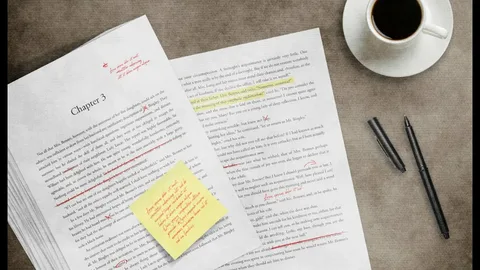
Many manuscripts fail long before they reach readers not because the ideas lack value, but because the writing lacks refinement. Authors often underestimate how much professional polishing affects readability, credibility, and publishing success. Even highly creative or informative content can appear amateurish without the input of a professional editor, who identifies structural gaps, language errors, and clarity issues that authors themselves may overlook.
Industry insights suggest that a large share of rejected manuscripts suffer from avoidable editorial problems rather than conceptual flaws. Literary agents frequently note that submissions are dismissed within minutes if early pages show weak editing, inconsistent tone, or unclear narrative direction. Readers are equally sensitive: surveys of book buyers show that grammatical errors and confusing structure are among the top reasons for abandoning a book. In essence, editing is not merely cosmetic it determines whether a manuscript communicates effectively or fails silently.
Structural Problems That Readers Notice Immediately
One of the most common reasons manuscripts fail is weak structure. Readers subconsciously expect logical progression, balanced pacing, and coherent development of ideas or plot. When structure falters, engagement drops quickly.
Typical structural failures in unedited manuscripts:
-
Disorganized chapter flow or argument sequence
-
Abrupt transitions between scenes or sections
-
Overly slow openings or rushed endings
-
Missing context or unresolved threads
-
Repetition without progression
Research in reading psychology shows that comprehension declines when textual organization is inconsistent. In nonfiction, unclear hierarchy of ideas confuses readers. In fiction, uneven pacing disrupts immersion. Developmental editing addresses these macro-level issues by reshaping content flow before line-level corrections begin. Without such intervention, manuscripts often feel incomplete or unfocused, leading to rejection or poor reviews.
Language and Clarity Issues That Damage Readability
Even structurally sound manuscripts can fail due to sentence-level weaknesses. Language clarity directly influences how easily readers process and trust content. Studies on readability indicate that readers disengage when sentences become dense, repetitive, or grammatically flawed.
Common clarity problems without editing:
-
Grammar and punctuation errors
-
Wordiness and filler phrases
-
Ambiguous or confusing wording
-
Inconsistent tone or voice
-
Overly complex sentence construction
Readers interpret frequent errors as signals of low authority. In nonfiction, this reduces credibility; in fiction, it disrupts narrative flow. Copyediting and line editing refine language to ensure precision and smooth reading. Without them, even compelling ideas become difficult to absorb, causing readers to abandon the manuscript prematurely.
Character, Voice, and Consistency Errors in Fiction
Fiction manuscripts rely heavily on consistency and believable characterization. Without editorial oversight, inconsistencies often accumulate unnoticed by authors who are deeply familiar with their own worlds.
Typical fiction consistency failures:
-
Characters behaving out of established personality
-
Dialogue that sounds unnatural or repetitive
-
Shifts in narrative perspective
-
Timeline contradictions
-
Continuity errors in details or settings
Reader immersion depends on stability within the fictional environment. When inconsistencies appear, readers become aware of the writing process rather than the story. This breaks emotional engagement, which is essential for positive reception. Developmental and line editing ensure narrative cohesion and voice consistency across the manuscript.
Credibility and Accuracy Problems in Nonfiction
Nonfiction manuscripts face a different but equally critical risk: credibility. Without editing, factual, logical, and explanatory gaps often remain.
Common nonfiction failures without editing:
-
Outdated or incorrect facts
-
Weak or missing citations
-
Logical leaps in arguments
-
Repetition without deeper analysis
-
Poorly explained concepts
Readers approach nonfiction with expectations of authority and reliability. Surveys in educational publishing show that perceived accuracy strongly correlates with reader trust and recommendation likelihood. Editorial review verifies facts, strengthens arguments, and ensures clarity of explanation. Without it, nonfiction manuscripts appear unreliable or superficial, reducing their impact and longevity.
Formatting and Presentation Flaws That Signal Amateurism
Presentation quality significantly shapes reader perception. Even before reading deeply, audiences judge professionalism through formatting and layout. Unedited manuscripts often carry visible presentation issues that diminish perceived value.
Frequent formatting problems:
-
Inconsistent headings and spacing
-
Irregular typography or alignment
-
Citation or style inconsistencies
-
Poor chapter structuring
-
Layout errors in print or digital versions
These flaws are particularly noticeable during production stages such as book printing and binding services, where inconsistencies become visually amplified. Readers equate clean formatting with credibility and professionalism. Editing and formatting review ensure that presentation supports rather than undermines content quality.
Market and Publishing Consequences of Skipping Editing
Beyond readability, lack of editing directly affects publishing outcomes and market performance. Industry reports consistently show that editorial quality correlates with acceptance rates and reader satisfaction.
Publishing impacts of poor editing:
-
Higher manuscript rejection rates
-
Negative early reviews
-
Reduced reader retention
-
Lower sales and discoverability
-
Weak author reputation growth
In self-publishing markets, reader reviews often highlight editing quality as a decisive factor in ratings. Books with noticeable errors receive significantly lower average scores. For traditionally published authors, agents often filter submissions based on editorial polish before considering concept or market fit. Thus, editing is closely tied to commercial viability.
Psychological Bias: Why Authors Miss Their Own Errors
A key reason manuscripts fail without editing is cognitive bias. Authors cannot easily evaluate their own work objectively because they already know the intended meaning.
Common author blind spots:
-
Familiarity with text obscures errors
-
Assumption that meaning is clear
-
Emotional attachment to wording
-
Difficulty detecting structural imbalance
-
Overlooking repetition
Cognitive psychology research confirms that writers process their own text differently from unfamiliar readers. They mentally fill gaps and correct errors automatically, leading to overestimation of clarity. External editing provides the necessary distance to identify issues that authors naturally miss.
Types of Book Editing That Prevent Manuscript Failure
Different editing stages address distinct risks in a manuscript. Skipping any stage increases the likelihood of failure in specific areas.
Key editing types and their roles:
-
Developmental editing: Structure, pacing, content organization
-
Line editing: Style, tone, flow, readability
-
Copyediting: Grammar, accuracy, consistency
-
Proofreading: Final surface corrections
Each stage acts as a quality filter. Developmental editing prevents structural confusion, line editing improves engagement, copyediting ensures correctness, and proofreading eliminates residual errors. Together, they transform a draft into a polished manuscript capable of meeting reader expectations.
Conclusion
Manuscripts rarely fail because ideas are weak; they fail because execution lacks refinement. Without editing, structural gaps, language errors, inconsistencies, and presentation flaws accumulate until readers disengage or publishers reject the work. Editing converts raw writing into coherent, credible, and engaging content that readers can trust and enjoy.
For authors seeking lasting impact, editing is not optional or cosmetic it is foundational. It ensures clarity of message, strength of narrative, and professionalism of presentation. Ultimately, the difference between a manuscript that fails and one that succeeds often lies in the invisible but essential work of editing.

 English
 Arabic
 Spanish
 Portuguese
 Deutsch
 Turkish
 Dutch
Dutch
 Italiano
 Russian
 Romaian
 Portuguese (Brazil)
 Greek
Greek