


In an era where many fantasy games drift toward vibrant colors and heroic aesthetics, Diablo 4 made a deliberate choice to return to darkness. The announcement trailer, with its haunting imagery of a blood-soaked cathedral and a tormented soul being dragged into the earth, signaled a clear intention: this would be a return to the gothic horror that defined the franchise’s earliest entries. Upon release, the game delivered on that promise with an artistic vision that stands as one of the most cohesive and atmospheric in the action RPG genre. Every element, from the character models to the environmental details, serves a singular purpose: to immerse the player in a world that is brutal, unforgiving, and hauntingly beautiful.
The art direction of Diablo 4 draws heavily from the paintings of Francis Bacon and the dark romanticism of 19th-century European art. The world of Sanctuary is rendered in a palette of muted earth tones, punctuated by the crimson of fresh blood and the sickly green of demonic corruption. Character models exhibit a level of detail that rewards close inspection: weathered armor shows the scars of battle, faces are lined with exhaustion and determination, and the monstrous designs of demons blend human anatomy with unnatural horror. The camera perspective, positioned closer to the player character than in previous entries, emphasizes this detail while creating a sense of intimacy with the violence unfolding on screen.
The keyword that encapsulates the game’s visual identity is atmosphere, and it permeates every zone. The Fractured Peaks greet players with snow-covered mountains and abandoned chapels, a frozen wasteland where survival is itself an act of defiance. Scosglen offers ancient forests and crumbling druidic stones, a land where nature has turned hostile and the old gods demand blood. The Dry Steppes stretch across arid badlands, where dust storms obscure the horizon and cannibal tribes stalk the cliffs. Kehjistan presents the remnants of a once-great empire, its golden domes now cracked and its streets overrun with demons. Hawezar is a swamp of decay and stagnation, where the boundaries between life and death have rotted away. Each region possesses its own visual language, its own history etched into the terrain, and its own horrors waiting in the shadows.
The dynamic weather and day-night cycle reinforce this atmospheric depth. Storms roll across the Dry Steppes, reducing visibility and creating moments of genuine tension as enemies emerge from the haze. Snow falls in the Fractured Peaks, muffling sound and transforming familiar routes into treacherous paths. Night brings new enemy spawns and alters the lighting dramatically, casting long shadows that stretch across cathedral floors and alleyways. These environmental systems are not merely cosmetic; they affect gameplay, with certain events and enemies appearing only under specific conditions. The world of Diablo 4 breathes, and in doing so, it becomes a space that players inhabit rather than simply traverse.
The audio design matches the visual ambition. The soundtrack, composed by a team that includes returning veterans and new collaborators, blends orchestral arrangements with dissonant textures. The whispers of the Tree of Whispers haunt specific zones, their voices layered with menace and seduction. Enemy sounds are distinct and informative: the howl of a werewolf signals an incoming pack, the gurgle of a drowned shaman warns of poison, the chant of a fallen lunatic announces a coming explosion. This soundscape rewards attentive players while deepening the immersion for everyone who ventures into Sanctuary.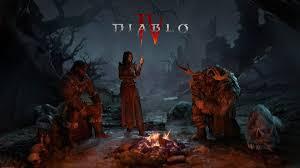
Diablo 4 stands as a testament to the power of cohesive artistic vision. In an industry where visual trends shift rapidly, the game commits to a singular aesthetic: dark, grounded, and unapologetically grim. It is a world that feels dangerous, a place where beauty exists only in the brief moments between horrors. For players who value atmosphere as much as mechanics, Sanctuary has never felt more alive. The descent into darkness continues, and the art of Diablo S12 Items ensures that every step is worth witnessing.

 English
 Arabic
 French
 Spanish
 Portuguese
 Deutsch
 Turkish
 Dutch
Dutch
 Italiano
 Russian
 Romaian
 Portuguese (Brazil)