

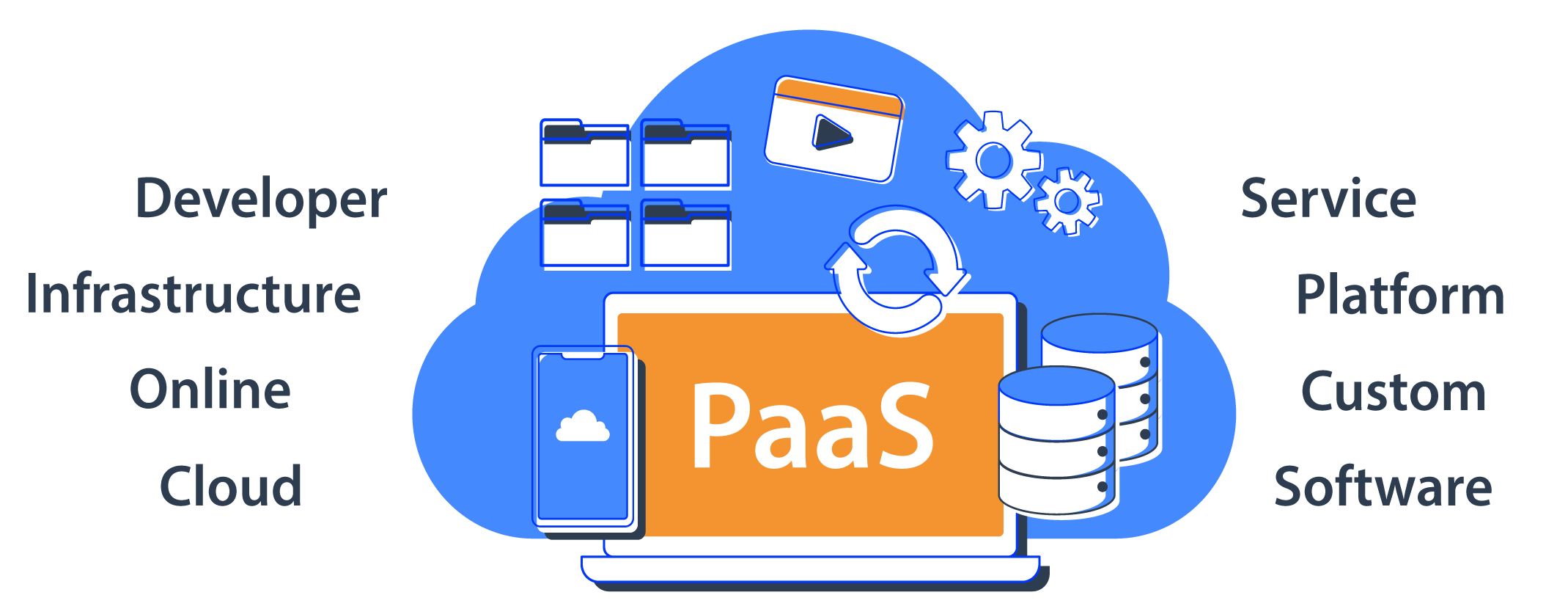
As the foundational concepts of Platform as a Service become deeply embedded in the enterprise IT playbook, the industry is looking towards a new set of innovations to drive future expansion. The horizon is rich with significant Platform as a Service Market Opportunities that promise to make application development even more abstract, more intelligent, and more accessible to a broader audience. These opportunities are primarily focused on the evolution towards serverless computing, the rise of specialized, vertical-specific platforms, and the deep integration of artificial intelligence into the development lifecycle. For PaaS vendors, the future is about moving up the value chain—providing not just a place to run code, but an intelligent, automated, and highly specialized environment that actively assists in the creation of better software. The companies that can successfully deliver on this vision of a more "opinionated" and intelligent platform will lead the next wave of growth and further solidify the cloud as the definitive environment for modern application development.
The single most significant opportunity and evolutionary trend in the PaaS market is the shift towards serverless computing. Serverless, also known as Function-as-a-Service (FaaS), represents the next level of abstraction above traditional PaaS. In a serverless model, developers no longer think about applications or servers at all; instead, they write and deploy individual, event-driven "functions." The cloud provider is responsible for automatically executing the function in response to a trigger (like an API call or a new file being uploaded to storage) and for scaling it from zero to thousands of instances and back down again, with the developer paying only for the precise compute time consumed during execution. Platforms like AWS Lambda, Azure Functions, and Google Cloud Functions are at the forefront of this movement. This model offers extreme cost-efficiency and eliminates almost all operational overhead. The opportunity for PaaS providers is to build comprehensive serverless platforms that not only run functions but also provide the necessary supporting services (like databases and storage) and orchestration tools to build complex applications out of these small, event-driven components.
Another major opportunity lies in the development and proliferation of specialized, vertical-specific PaaS offerings. While general-purpose application platforms are a mature market, there is a growing demand for platforms that are purpose-built to meet the unique needs of specific industries. For example, a "Healthcare PaaS" could offer a pre-configured environment that is fully compliant with HIPAA regulations and includes built-in services for handling electronic health records (EHR) and medical imaging data. A "Financial Services PaaS" could provide a highly secure environment that meets PCI DSS compliance standards and offers integrations with common financial data feeds and payment processing systems. Similarly, there are emerging platforms specifically for manufacturing (Industrial IoT PaaS) and retail (Commerce PaaS). By providing this industry-specific functionality and compliance "out of the box," these vertical PaaS solutions can dramatically accelerate development and reduce risk for companies in regulated industries, creating a significant, high-value market opportunity beyond the general-purpose platforms.
The deep integration of Artificial Intelligence (AI) into the development process itself—often termed "AI-assisted development"—is another transformative opportunity for PaaS platforms. The future is not just about providing a platform to run AI applications, but about using AI to help build all applications. This is manifesting in a new generation of "AI code assistants" or "co-pilots," such as GitHub Copilot (powered by OpenAI). These tools are integrated directly into the developer's coding environment and use large language models (LLMs) to suggest entire blocks of code, complete functions, and even help debug errors, acting as an intelligent pair programmer. The opportunity for PaaS providers is to deeply integrate these AI capabilities into their entire platform. Imagine a PaaS that can not only suggest code but can also automatically generate the necessary infrastructure configurations, suggest optimal database schemas, and even identify potential security vulnerabilities in the code as it is being written. This vision of an "AI-powered PaaS" that assists developers at every step of the lifecycle would represent a quantum leap in developer productivity and application quality.
Explore More Like This in Our Regional Reports:

 Arabic
 French
 Spanish
 Portuguese
 Deutsch
 Turkish
 Dutch
Dutch
 Italiano
 Russian
 Romaian
 Portuguese (Brazil)
 Greek
Greek