


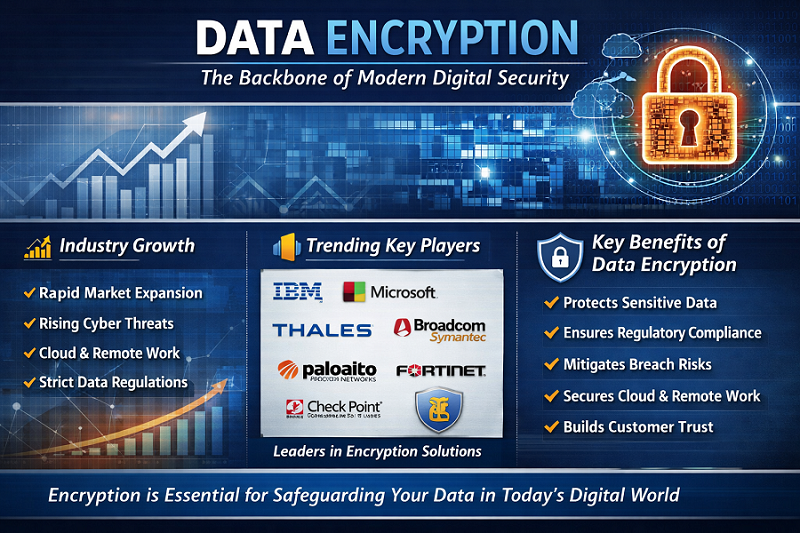
The competitive landscape of the global security sector is multifaceted, and a closer look at the Data Encryption Market Share reveals a diverse ecosystem of players rather than a single dominant entity. The market is not a monolith but is segmented and served by several distinct categories of vendors, each with its own strengths and target audiences. At the top are large, diversified technology conglomerates and cybersecurity giants that offer broad security portfolios, with encryption being a key component. This category includes companies like Microsoft, IBM, Oracle, Broadcom (through its Symantec acquisition), and Thales. These established players leverage their vast enterprise customer bases, extensive sales channels, and trusted brand names to command a significant portion of the market. They often bundle encryption solutions with their core products—such as operating systems, databases, and larger security suites—making their offerings a convenient and integrated choice for many large organizations seeking a single-vendor solution for their diverse security needs, thus solidifying their substantial market position.
A significant and growing portion of the market share is held by the major cloud service providers (CSPs): Amazon Web Services (AWS), Microsoft Azure, and Google Cloud Platform (GCP). These hyperscale cloud giants are rapidly becoming dominant forces in the data encryption space by making security a core, integrated feature of their platforms. They offer a comprehensive and user-friendly suite of native encryption services, many of which are enabled by default. For instance, major storage services like Amazon S3 and Azure Blob Storage automatically encrypt all data at rest. Furthermore, each provider offers a robust and scalable Key Management Service (KMS) that simplifies the daunting task of creating, managing, and controlling cryptographic keys. The seamless integration, ease of use, and consumption-based pricing of these cloud-native encryption tools make them the default and most logical choice for the millions of organizations that are "born in the cloud" or are migrating their workloads to it. This captive audience and frictionless adoption model are allowing CSPs to rapidly capture a massive and growing share of the overall encryption market.
While the behemoths battle for broad market dominance, a vibrant ecosystem of specialized encryption vendors continues to thrive by focusing on specific niche areas and delivering best-of-breed solutions. These companies often differentiate themselves through superior technology, a more intuitive user experience, or deep expertise in a particular vertical or use case. For example, some vendors specialize in email and collaboration security, offering advanced end-to-end encryption for platforms like Microsoft 365 and Google Workspace. Others focus on data-centric security, providing solutions that encrypt individual files and embed access policies that travel with the data wherever it goes. Companies like Thales (particularly through its acquisition of Gemalto) and Entrust are leaders in the Hardware Security Module (HSM) market, providing the gold standard for physical key protection. These specialized players hold a strong and defensible market share within their respective niches by solving specific, complex problems more effectively than the more generalist offerings of larger vendors, proving that deep expertise can successfully compete against broad-line providers.
Finally, it is impossible to discuss the data encryption landscape without acknowledging the monumental role of the open-source community. While open-source projects do not have "market share" in the traditional commercial sense, their software underpins a vast portion of the entire digital ecosystem. The OpenSSL project, for instance, is the de facto library for implementing TLS/SSL and is used by a majority of web servers worldwide to secure HTTPS traffic. The Linux Unified Key Setup (LUKS) is the standard for disk encryption in the Linux environment, and projects like VeraCrypt provide powerful, free, and publicly-audited disk encryption tools for multiple operating systems. This open-source software forms the foundational layer upon which many commercial products are built. The transparency, community vetting, and lack of licensing fees associated with open-source cryptography make it a cornerstone of internet security and a critical, albeit non-commercial, component of the overall market, providing the building blocks that secure communications and data for billions of users daily.
Explore More Like This in Our Regional Reports:

 English
 Arabic
 French
 Spanish
 Portuguese
 Deutsch
 Turkish
 Dutch
Dutch
 Russian
 Romaian
 Portuguese (Brazil)
 Greek
Greek