


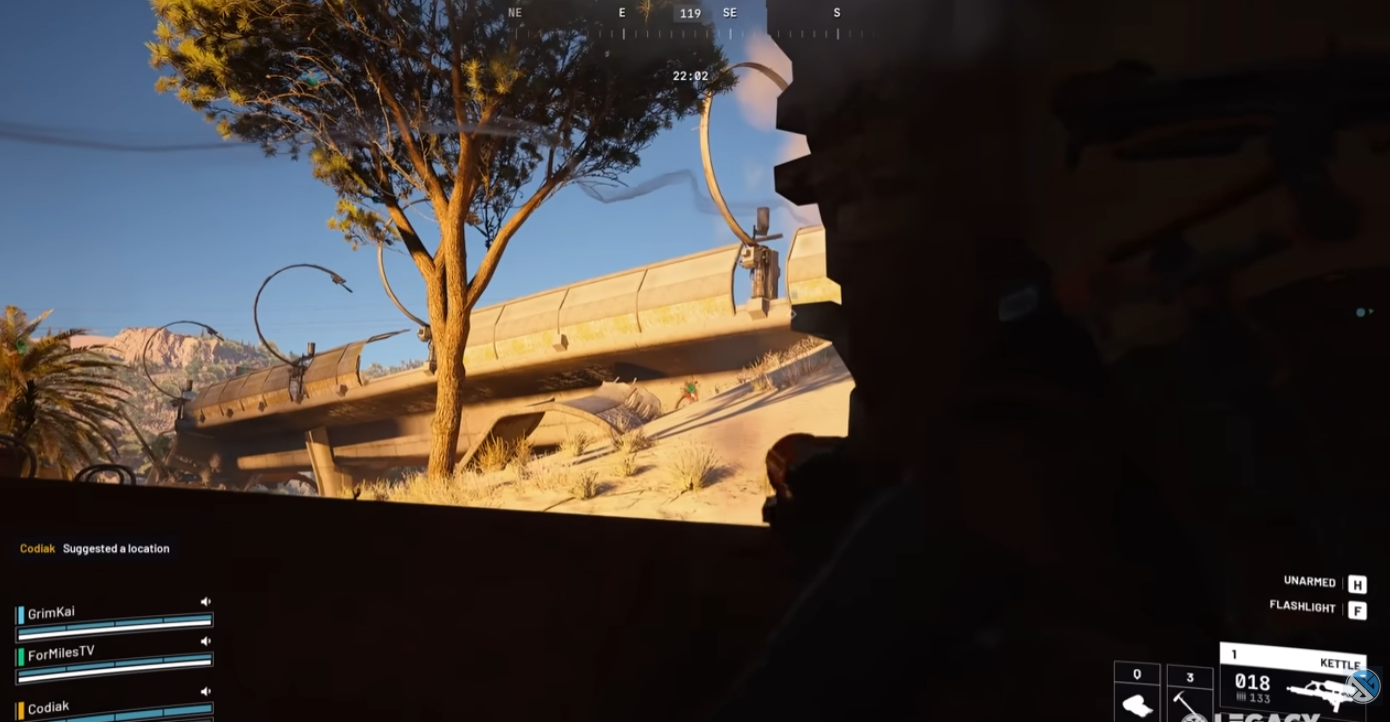
In Arc Raiders, ARC is the main environmental threat most players deal with every run. ARC units are machines that drop into the Rust Belt and control large parts of the map. You do not “clear” ARC once and move on. They are always there, and learning how to live around them is a core part of the game.
In general, ARC enemies are not all meant to be fought head-on. Some are there to slow you down, force noise, or punish careless movement. Most players who survive longer runs are the ones who know when to fight, when to avoid, and how to read ARC behavior before things escalate.
How Does ARC Aggression Actually Work?
Most ARC units use a scanner beam that shows their current alert state. Understanding this beam is one of the most important survival skills.
-
White beam means the ARC is just patrolling. If you move carefully, you can usually pass without combat.
-
Blue beam means it heard something small, like footsteps or a short sprint. It is curious but not hostile yet.
-
Yellow beam means the ARC suspects Raider activity and is actively checking the area.
-
Red beam means you have been identified, and combat is about to start or already has.
In practice, most players try to never let a beam reach red unless they are already committed to a fight. Running, sliding, or firing unsuppressed weapons too close will usually push blue or yellow straight into red.
What Is the Difference Between Armored and Unarmored ARC?
ARC units can be armored or unarmored, and this matters more than many new players realize.
-
Unarmored ARC can usually be taken down with standard ammo and careful positioning.
-
Armored ARC requires heavy ammunition. Shooting them with light weapons is mostly a waste of time and noise.
Usually, experienced players do not shoot armored ARC unless they have a clear plan, enough heavy ammo, and a safe exit. Otherwise, it is better to route around them.
Why Are ARC PowerCells Important?
Every ARC enemy drops ARC PowerCells when destroyed. These can be used to recharge shields, which often saves a run after a bad fight.
In general, most players do not farm ARC just for PowerCells, but they are a useful bonus when combat is unavoidable. Picking them up quickly is important, since standing still after killing ARC often attracts more attention.
How Do Small ARC Units Affect Movement?
Small ARC units are everywhere and usually cause trouble in tight spaces.
-
ARC Tick hides on walls or ceilings and jumps onto players. Most players clear rooms slowly to avoid surprise damage.
-
ARC Pop rolls toward you and detonates. Shooting it early is safer than trying to outrun it indoors.
-
ARC Fireball looks small but is armored and shoots fire, making it dangerous in corridors.
These units usually punish rushing and careless looting. Clearing corners and ceilings becomes a habit over time.
What About Turrets and Snipers?
Stationary ARC units control space more than they deal damage.
-
ARC Turret scans constantly and is often found inside buildings.
-
ARC Sentinel sits high outside and acts like a sniper. It has a weak capsule that skilled players aim for.
In practice, most players either disable these from range or avoid their line of sight completely. Fighting them up close is risky and rarely worth it.
How Dangerous Are Flying ARC Units?
Flying ARC units are often what turn a small mistake into a full retreat.
-
ARC Snitch does no damage but calls reinforcements if it spots you.
-
ARC Wasp shoots light ammo and rarely appears alone.
-
ARC Hornet is tougher, with armored rotors, and usually leads Wasps.
-
ARC Rocketeer (Gooba) is one of the most dangerous flying units due to rockets and area damage.
Usually, players prioritize killing Snitches first to prevent escalation. Ignoring them often leads to multiple enemies stacking at once.
Which Large ARC Units Should You Avoid?
Some ARC units are designed to be threats rather than regular fights.
-
ARC Leaper can jump huge distances and deals heavy shockwave damage.
-
ARC Bastion uses a minigun and is often supported by air units.
-
ARC Bombardier launches mortars and relies on ARC Spotters to mark targets.
Most players avoid these unless they are geared, coordinated, or forced by objectives. Fighting them solo is rarely efficient.
What Happens During Major ARC Events?
Certain ARC units only appear during special conditions.
-
The Queen guards the Harvester during the Harvester Event and is extremely durable.
-
ARC Harvester has its own electric and fire defenses.
-
ARC Matriarch appears during specific map conditions and is even more dangerous than the Queen.
In general, most players treat these events as high-risk zones. The loot can be good, but survival rates are low without preparation.
What Are ARC Husks and Probes Used For?
ARC Husks, such as Wasp Husks or Rocketeer Husks, are remnants of destroyed units and can provide crafting or upgrade materials.
ARC Probes are static machines scanning the ground for Speranza. Lore-wise, they hint at past disasters, but mechanically they are usually treated as loot points or environmental hazards.
Some players who want to optimize progression pay close attention to ARC-related loot paths, and discussions about gear often reference things like ARC Raiders items for sale on U4N marketplace as part of the wider economy conversation, even though in-game survival still depends mostly on skill and decision-making.
What Is the Most Practical Advice for Dealing With ARC?
In practice, ARC is less about raw combat skill and more about discipline.
Most players improve by:
-
Moving slowly in high-ARC areas
-
Listening for audio cues
-
Avoiding unnecessary fights
-
Knowing when to retreat
ARC is not meant to be “beaten” in one run. It is meant to shape how you move, loot, and choose battles. Once you accept that, the game becomes much more manageable.

 English
 Arabic
 French
 Spanish
 Portuguese
 Deutsch
 Turkish
 Dutch
Dutch
 Italiano
 Russian
 Romaian
 Greek
Greek