



Becoming a home improvement contractor is an exciting and satisfying profession for people who have an interest in construction, design, and redesigning living spaces. These professionals deal with a large range of projects, including kitchen and bathroom remodeling, deck and patio installation, exterior remodeling, as well as a complete makeover of the whole home. The position demands both practical technical expertise, good organizational skills, and business skills in order to effectively handle budgets, deadlines, and customer expectations.
In addition to construction knowledge, a contractor needs to be aware of the regulatory requirements, such as licensing, insurance, and safety regulations, to work within the law and ethical standards. Through the appropriate training, experience, and strategy, potential contractors can create a successful and sustainable company that will assist homeowners in improving their homes and allow them to have a career that combines creativity, problem-solving, and entrepreneurship.
Understanding the Role of a Home Improvement Contractor
A home improvement contractor is in charge of planning, implementing, and totaling up renovation or remodeling work. Responsibilities include:
-
Scheduling a meeting with clients to know what they want to renovate.
-
Estimating costs and proposals for projects. This often includes preparing accurate material takeoff lists to calculate quantities and keep budgets controlled.
-
The employment and management of subcontractors, including electricians, plumbers, and carpenters.
-
Assuring the building codes and safety regulations.
-
Project schedule and project cost management.
-
Managing quality management and end checks.
The contractor is the linking agent between the homeowner and the construction team and would make sure the work is done efficiently, safely, and satisfactorily to the client.
Step 1: Gain Relevant Experience
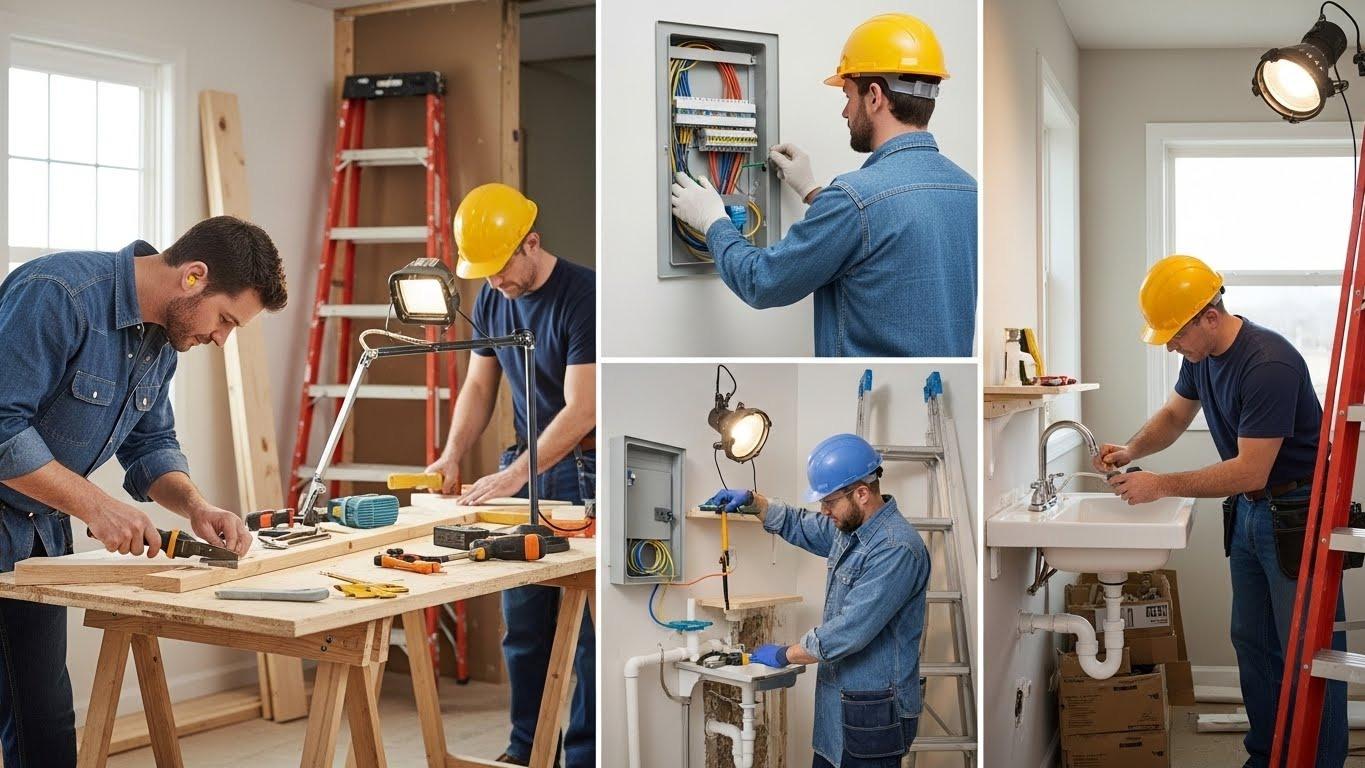
The construction or home improvement experience is of great essence before one becomes a contractor. Most of the successful contractors begin by working as:
-
Carpenter
-
Electrician
-
Plumber
-
Construction worker (general laborer).
-
Construction manager
Practical training gives them technical information, knowledge of construction techniques, and knowledge of tools and materials. Also, the experience can assist the aspiring contractors to establish a professional network of suppliers, subcontractors, and potential customers that will be handy in the future when they operate their own business.
Step 2: Complete Necessary Education and Training
Formal education is not essential, but coursework or degrees in construction, architecture, or business may be extremely useful. Relevant programs include:
-
Associate/Bachelor's in construction management.
-
Apprenticeship programs in certain technical fields, such as carpentry, plumbing, or electricity.
-
Training courses for online or in-person home improvement contractor training courses.
The programs offer a good background in construction principles, project management, budgeting, building codes, and business operations. There are also trade-specific credentials that are more credible and provide a better chance of employment.
Step 3: Understand Local Licensing Requirements
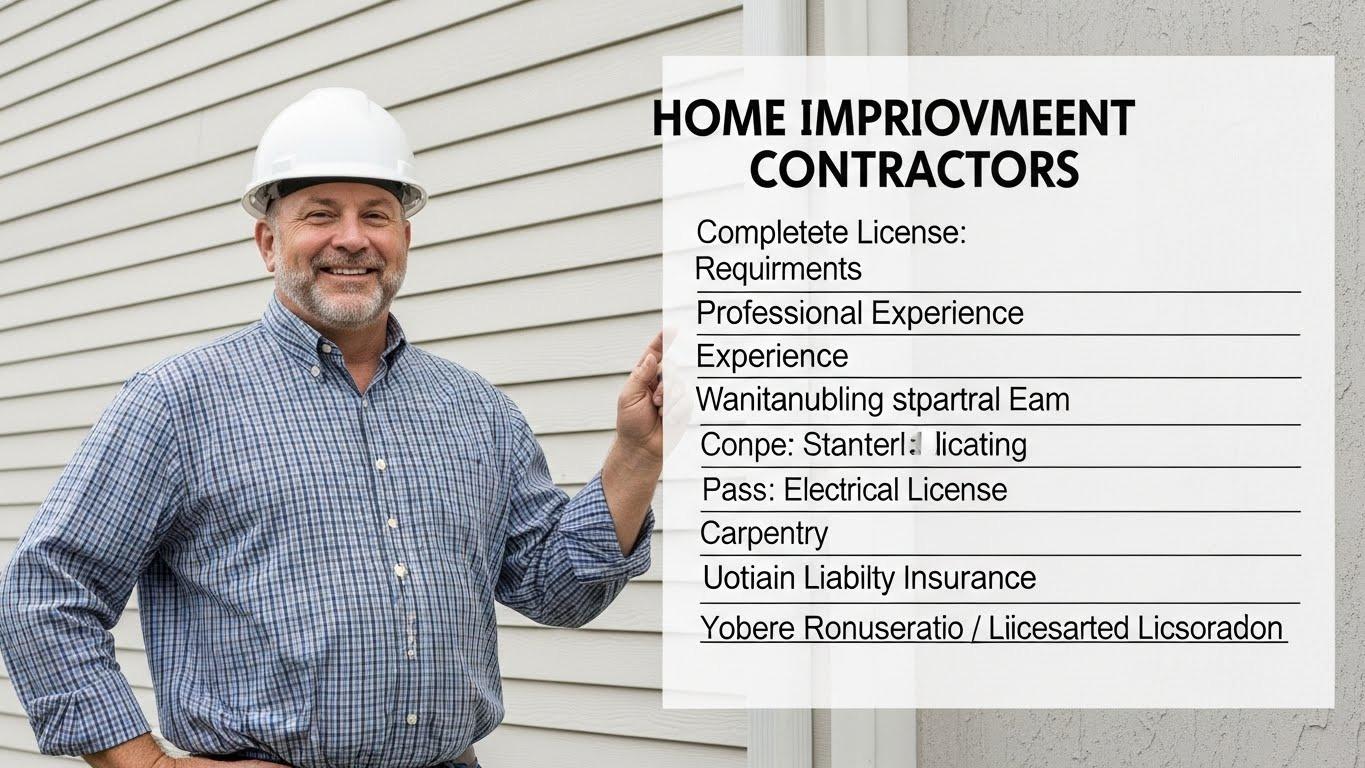
Home improvement contractors are obliged to be licensed. Each state and country has its own regulations, but generally, all contain:
-
Passing a contractor exam on construction, safety, and business law.
-
Evidence of experience in the home improvement or construction sector.
-
Liability insurance and bonding to secure clients and workers.
-
State or local license registration.
The rule is to research the local or state requirements before going after a contractor license. There are other states where the general and the specialty contractors are licensed separately; hence, ensure that you submit the right license depending on what you are offering.
Step 4: Acquire Insurance and Bonding.
The majority of the contractors are to be insured and bonded. They protect the contractor and the homeowner against possible unforeseen events such as accidents, property damage, or incompleteness. Examples of insurance include:
-
General liability insurance: This is the personal damage and injury (property) insurance.
-
Workers' compensation insurance: This is an insurance that is required when you hire workers, and it takes care of employees in case they sustain injuries at the place of work.
-
Surety bonds: The bonds guarantee work and contract fidelity.
The appropriate insurance and bonding are not only the means of ensuring that the law is adhered to, but also ensuring that it is credible among the clients and allows the contractor to participate in larger projects without any concerns.
Step 5: Develop Business Skills

Being a home improvement expert is not a purely construction-related activity only but rather a business that should be successfully operated. The business skills necessary include:
-
To be aware of the material costs, labour rates, and overhead to provide the appropriate project estimates.
-
Marketing and Client Acquisition: In order to attract clients, I will depend on the internet, social media, and word of mouth.
-
Project Management: planning, subcontractor coordination, and on-time completion.
-
Communication: Interaction with the clients, suppliers, and subcontractors. Keeping it open.
The future contractors may undertake small business management, marketing, or accounting courses to enhance these skills and emerge as successful contractors in order to ensure sustainable development.
Step 6: Build a Professional Network.
Networking is very critical in the home improvement business. Good association with suppliers, sub-contractors, and other contractors would allow you to:
-
Acquire high-quality materials at an affordable price.
-
Fear of hiring professional workers for specialized work.
-
Referrals by the recommendation of satisfied clients and business associates.
-
Be informed of new products, methods, and policies.
The best ways to develop your network are to attend trade shows, join professional associations, and be present at local construction events.
Step 7: Procurement of Tools and Equipment
Depending on the amount of work, an efficient contractor should possess many tools and equipment. Necessary items may entail:
-
Power tools: Saws, sanders, and Drills.
-
Hand tools: Hammers, screwdrivers, measuring tapes.
-
Protective equipment: Helmets, gloves, goggles, and a harness.
-
Tool transportation and materials transportation.
It is also cost-effective to hire specialized equipment in case of bigger projects before you start a stream of business.
Step 8: Start Small and Build Reputation

Small firms, such as minor renovations, painting, or flooring, are the first projects that the new contractors can undertake. Upon doing them, you will be in a position to:
-
Gain experience in managing whole projects.
-
Prepare a list of work to show potential clients.
-
Review and get referrals to enhance credibility.
-
Know the problems of working on projects alone.
With greater experience and reputation, you will be in a position to have larger renovations, additions, and intricate restructuring of a house.
Step 9: Stay Updated on Industry Trends
The home improvement industry is continuously in a transition phase. Contractors must be in touch with:
-
The ecological solutions and new building materials.
-
Energy saving and smart home technology.
-
The changes in building policies and regulations.
-
New design patterns are desirable to the homeowners.
Constant learning, trade magazines, and professional associations are used to keep the contractors abreast of the latest developments and provide the clients with the newest solutions.
Step 10: Maintain Licenses and Certifications
When the contractors are being licensed, they should ensure that all licenses and certifications are current. This includes:
-
This is the renewal of state licenses on an as-needed basis.
-
Having insurance and bonding.
-
Completing continuing education courses, where required.
-
Maintaining a professional qualification is one of the methods of making sure that your business is legal.
Conclusion
One requires a blend of business skills, construction skills, as well as professional responsibility to be a home improvement contractor. The beginning of the process is based on gaining experience, obtaining the appropriate education and licenses, getting insurance, and developing a good network. One can become a home improvement contractor and enjoy a successful and fulfilling career by starting small, working on quality, and continuing to never quit to perfect your trade. Not only does a qualified and competent contractor add value to the homeowners, but he or she also improves safe, functional, and beautiful places to dwell.
FAQs
Do I need formal education to become a home improvement contractor?
No experience is required; however, a formal education either in business management or construction can be invaluable help.
How much does it cost to get a contractor's license?
It depends on the state; however, the price may range from several hundred dollars to several thousand dollars application fees, exam fees, and insurance/bonding costs.

 English
 Arabic
 Spanish
 Portuguese
 Deutsch
 Turkish
 Dutch
Dutch
 Italiano
 Russian
 Romaian
 Portuguese (Brazil)
 Greek
Greek